IMPRS-CMS Group Leaders
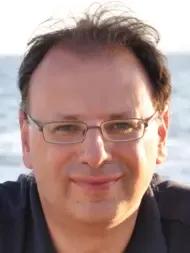
Prof. Dr. Ali AlaviDirector at the Max Planck Institute for Solid State Research (MPI-FKF)homepage |
Electronic Structure TheoryThe research in the Electronic Structure Theory department is largely concerned with the development of accurate methods to solve many-electron Schrodinger and more generally many-body type eigenvalue problems, which can handle electron correlation and spin-related phenomena, as well as ameliorating basis set errors which rise from slow-basis set convergence which appears in ab initio descriptions. These are problems for which exact solutions generally require exponentially large amounts of computer resources. Progress in such problems usually requires approximate techniques, such as stochastic diagonalisation and related active-space methods, coupled-cluster theory, as well as explicitly correlated methods such as "transcorrelation". We welcome enquiries from qualified individuals (with a Masters in a relevant field of theoretical chemistry or physics). Dr. Giovanni Li Manni, group leader at the Electronic Structure Theory Department offers a PhD position in the Field of Theoretical and Computational Chemistry for Enlightening open-shell 3d Metal Complexes through Compressed Ligand Fields. More info can be found here |
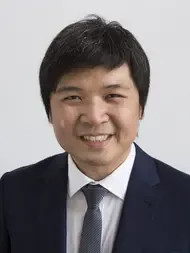
Dr. Kelvin AnggaraERC Group Leader at the Max Planck Institute for Solid State Research (MPI-FKF) |
Single Molecule Microscopy of Complex BiomoleculesAnggara Group uses low-temperature scanning probe microscopy to unveil structures, dynamics, and properties of complex biomolecules at single molecule level. We seek to understand how molecular structures give rise to physical and biochemical properties, by performing single molecule imaging experiments corroborated by ab initio calculations. In particular we focus on complex biomolecules that are intractable by today’s analytical techniques such as polysaccharides and glycoproteins.
|
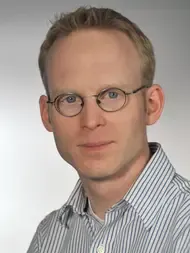
Prof. Dr. Christian AstGroup Leader at the Max Planck Institute for Solid State Research (MPI-FKF)homepage |
Quantum Materials and Nanoelectronics - Atomic Scale SpectroscopyThe research in our group is focused on the electronic and magnetic properties of few level systems looking for new quantum limits at the atomic scale. We are exploiting the interplay of magnetism, superconductivity, and correlation effects to isolate few level systems and understand their dynamics. Using scanning tunneling microscopy at lowest temperatures (between 10mK and 500mK), we study individual magnetic impurities coupled to superconducting substrates. We are interested in the resulting phenomena, such as Yu-Shiba-Rusinov states, and their suitability for quantum sensing or information processing. In addition, we combine electron spin resonance spectroscopy with scanning tunneling microscopy to understand and manipulate single spin systems isolated from their enviornment. |
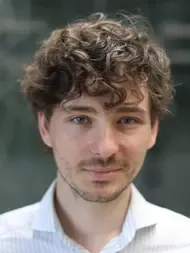
Dr. Julien BarrierGroup Leader at the Max Planck Institute for Solid State Research (MPI-FKF)homepage |
Low-dimensional quantum electronicsThe emergence of strongly correlated electronic phases remains one of the unsolved puzzles of modern condensed matter physics. In low dimensions, the strength of interactions between electrons is enhanced, which make these systems prime candidate to understand the origin of emerging electronic phases, with the added benefit of metrology and quantum computing applications. Our research group combines nanofabrication of graphene structures, local probes and quantum transport at ultra-low temperatures to induce, control and explore strong electron interactions in one- and two-dimensional systems. We experimentally control the magnitude of electron-electron interactions in quantum materials to understand the interplay between quantum confinement, non-trivial topology and interaction strength. |
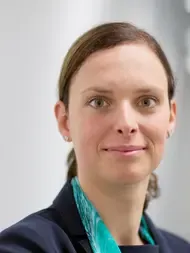
Prof. Dr. Stefanie BarzInstitute for Functional Matter an Quantum Technologies, University of Stuttgarthomepage |
Integrated Quantum Optics and Quantum InformationThe research of our group is concerned with quantum technologies and quantum optics. One particular research focus is quantum networks: we implement quantum protocols, build distributed quantum networks and perform secure quantum computations in them. Furthermore, we work on demonstrating quantum effects in systems with few particles and how to exploit those for applications. Our research is experimental and focuses on photonic quantum systems, meaning we generate, manipulate, and detect single photons. Furthermore, our research is interdisciplinary and involves aspects from physics, engineering, and computer science. |

Eva BenckiserGroup Leader at the Max Planck Institute for Solid State Researchhomepage |
X-ray Spectroscopy of Oxide HeterostructuresThe research in our group focuses on the study of transition-metal oxide thin films and multilayers using resonant x-ray spectroscopy. Our goal is to combine different quantum materials in a heterostructure to stabilize new phases with functional properties that can be used, for example, in sensor, memory or logic applications. |
Dr. Sebastian Bette |
|
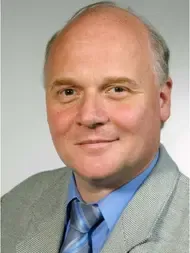
Prof. Dr. Joachim BillGroup Leader at the Institute for Material Science III, University of Stuttgarthomepage |
Bioinspired Materials, Fuel CellsThe main research direction concerns the synthesis and characterization of inorganic as well as organic / inorganic multifunctional materials. For the generation of the materials the principles of biomineralization are applied. Within the scope of this research field biomineralizing living systems, like algae or bacteria are investigated. These studies provide the base for the synthesis of functional materials. Beside this work on molecular bionics also the processing of ceramics by the thermolysis of preceramic compounds as well as powder technology and sintering are treated. In addition to that, the characterization of the structure-property relations plays an important role. Current offers: Within the framework of a collaborative project, we are looking for a PhD candidate who can work on the synthesis and characterization of hybrid inorganic-polymer membranes for high-temperature fuel cell application. This work will entail the preparation of polymer membranes together with gas diffusion electrodes for membrane electrode assemblies (MEA), as well as fuel cell measurements. For further information, please visit https://www.icvt.uni-stuttgart.de/institut/stellenangebote/(link is external)
|
Dr. Nikolay Bogdanov |
|
Dr. Alexander Boris |
|
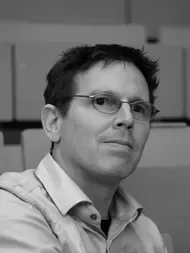
Prof. Dr. Hans Peter BüchlerInstitute for Theoretical Physics III, University of Stuttgarthomepage |
Quantum Many-Body Systems in Cold Atomic and Molecular GasesThe theory group has a long standing experience in the study of quantum phenomena in the field of atomic, molecular and optical physics. A special focus is on the man-body properties of strongly interacting quantum systems, as naturally realized with dipolar gases, cold atoms in optical lattices, polar molecules, and photons in a Rydberg media. The main research goals are the creation of exotic states of matter with ultra-cold gases, the design of quantum simulators for topological ordered phases and the study of their application for quantum information, as well as the understanding of strongly correlated states. |
Dr. Marko Burghard |
|
Prof. Dr. Andrea Cavalleri |
|
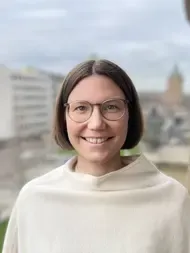
Dr. Laura ClassenGroup Leader at the Max Planck Institute for Solid State Research (MPI-FKF)homepage |
Correlated Phases in Quantum MaterialsThe understanding of fundamental, physical processes in quantum materials and the identification of universal aspects among them constitutes a necessary basis for the design of new quantum materials with desired functionalities. Our group investigates the collective behavior of interacting electrons which gives rise to the many fascinating phases of matter in quantum materials. We seek to explain the underlying mechanisms behind the phase formation and to determine characteristic properties of the different phases.We are particularly interested in situations when excitations of different phases strongly interact so that it is essential to consider their mutual influence on each other. This includes, for example, the study of quantum phase transitions or unconventional superconductivity. To account for the decisive role of interactions and the interplay of different degrees of freedom in these complex situations, we employ modern, field-theoretical tools with an emphasis on renormalization group techniques. We make use of microscopic and effective descriptions inspired by experimental observations to obtain a comprehensive picture of correlated phases in quantum materials. |
Prof. Dr. Oliver ClemensProfessor for Materials Chemistry at University of Stuttgarthomepage |
New Materials for Energy ApplicationsThe group works on a broad range of materials synthesis and characterization aspects. The development of novel battery systems, among them fluoride ion batteries and solid state batteries is a key topic in this aspect. But we reach out far beyond the pure battery aspects. For materials used within fluoride ion batteries as electrode materials, the intercalation and deintercalation of fluoride ions leads to a change of electronic properties, and can induce novel magnetic phenomena or superconductivity. The development of catalysts for the oxygen reduction reaction is further connected to the chemistry of oxyfluoride compounds. In addition, we target the development of materials for solid state batteries, considering their sustainability and suitability for circular economy, where we try to develop innovative separation processes to keep the materials as functional as possible. Methods used in the group comprise solid state and wet-chemical synthesis routes, thin film deposition (including pulsed laser deposition or spin coating) as well as topochemical low-temperature routes, combined with structural, electrochemical and magnetic characterization and compositional analysis. Currently, we are looking especially for candidates with a previous background in PLD-based synthesis of oxide films and/or characterization of eptiaxially grown films via diffraction and spectroscopic methods.
|
Prof. Dr. Raphaele ClémentDirector of the Max Planck Institute for Solid State Researchhomepage |
Department of Electrochemical MaterialsOur research seeks to elucidate the links between the structure and properties of technologically-relevant materials. The primary goal of our work is to advance electrochemical energy storage through the design and control of the atomic and electronic structure, and microstructure of materials, including the discovery of novel compounds, and through the optimization of interfaces and composite structures in devices. Our approach encompasses innovative synthesis approaches, electrochemical testing, as well as the in-depth investigation of structural and electronic phenomena taking place in the electrodes, in the electrolyte, and at their interfaces during battery function. For this, we use complementary diagnostic tools, from state-of-the-art spectroscopy, to diffraction/scattering, to electron microscopy. In particular, we develop high resolution solid-state nuclear magnetic resonance (NMR) spectroscopy, operando and in situ NMR and electron paramagnetic resonance (EPR) spectroscopy, magnetometry, and magnetic resonance imaging (MRI). Another pillar of our work is the development of first principles and statistical mechanics computations to facilitate the interpretation of our experimental results. |
Prof. Dr. Maria DaghoferInstitute for Functional Matter and Quantum Technologies, University of Stuttgarthomepage |
Condensed-Matter TheoryOur group investigates correlated electron systems, i.e., materials where interactions between electrons are crucial if we want to understand their properties. We have a certain focus on numerical investigations of model systems: While models are of course a severe simplification of a material, this abstraction implies at the same time that we can use them to test our understanding of the dominant processes and to identify the most important aspects. Current focuses of our research are multi-orbital systems, e.g. iron-based superconductors or iridates, and topological states of matter that arise through electron-electron and electron-spin interactions. |
Prof. Dr. Robert DinnebierLeader of the Scientific Facility "X-Ray Diffraction" at the Max Planck Institute for Solid State Research (MPI-FKF), Adj. Professor at the University of Stuttgart, Hon. Professor at the University of Tübingenhomepage |
X-Ray Powder Diffraction• All aspects of modern powder diffraction • Structure determination • Thermochromic / Photochromic / Electronic / Magnetic materials • Microstructure • In-situ/time-resolved • Non-ambient conditions • Rietveld refinement • Parametric refinement • Landau theory / Strain-order parameter coupling • Method of Maximum Entropy |

Prof. Dr. Martin DresselDirector of the 1st Physics Institute, University of Stuttgarthomepage |
Optical, Electronic, and Magnetic Properties of Quantum Materials, Topological Material, Superconducting Electronics, and Advanced Materials, BiomaterialsSolid state physics, correlated electron systems, molecular quantum materials, magnetically frustrated systems, quantum spin liquids, topological materials, Dirac and Weyl electrons, physics of low-dimensional solids, superconductivity, materials for quantum computers, superconducting electronics, electrodynamics of solids, infrared and THz optical measurements of solids, microwave spectroscopy, magneto-optics, ellipsometry. |
Prof. Dr. Kenichi EndoJunior professor at the University of Stuttgarthomepage |
Catalyst immobilization in metal–organic frameworks for CO2 hydrogenationOur research group is at the forefront of creating functional materials through the chemistry of metal–organic frameworks (MOFs) and covalent organic frameworks (COFs) for catalytic applications. We specialize in the development of MOCOF, the fusion of MOF and COF chemistry, to realize materials with superior properties, as well as creating well-defined catalytic sites in MOFs/COFs/MOCOFs. Our expertise spans coordination chemistry, organic chemistry, and materials science, supported by an extensive range of analytical techniques. These skills empower us to thoroughly understand and design the synthetic processes, structures, and catalytic behaviors of porous crystalline materials. By leveraging our knowledge and methodologies, we strive to push the boundaries of materials science and chemistry. In this application round, we plan to focus on a project about immobilizing molecular catalysts inside MOFs to enhance their performance for thermal CO2 hydrogenation. The tasks are the preparation of reported MOFs, the modification of MOFs with molecular catalysis by solution-based methods, the characterization of catalyst structure inside MOFs, and catalytic tests in collaboration with another group.
|
Dr. Dieter Fischer |
|
Prof. Dr. Gießelmann FrankInstitute of Physical Chemistry, University of Stuttgarthomepage |
Liquid CrystalsOur main research direction is the structure and dynamics of the liquid-crystalline state of matter. Liquid crystals are quintessential soft matter materials and provide an excellent testing ground for the advancement of essential concepts in condensed matter science, such as self-organization, phase transitions, hydrodynamics and elasticity. Systems exhibiting liquid crystalline order range from small rod- or disc-shaped organic molecules (e.g., the ‘classic’ liquid crystals used in LCD devices), over polymers, dispersions of micelles and nanoparticles (e.g., CNTs and viruses) to certain quantum electronic materials. Our research aims to elucidate the relations between the molecular structures, the symmetry and order parameters of liquid crystalline ordering, and the macroscopic properties of liquid crystals. We are particular interested in the unique chirality effects in liquid-crystalline systems, leading to self-organized chiral nanostructures which e.g. mimic the liquid-crystalline structures found in biological matter.
|
Dr. Manish GargGroup Leader at Max Planck Institute for Solid State Researchhomepage |
Quantum Microscopy and DynamicsThe focus of our research is to integrate the techniques of attosecond physics, scanning tunneling microscopy and ultrafast Raman spectroscopy to realize a four-dimensional space-time quantum microscope to capture electrons and atoms in action in molecules, two-dimensional materials and superconductors. The four-dimensional microscope is capable of probing matter at fundamental space-time quantum limits. We also pursue experiments on molecules present in the cavity of 'on-chip' nanodevices exploring different regimes of light-matter interaction. |
Prof. Dr. Harald GiessenDirector of the 4th Physics Institute, University of Stuttgarthomepage |
Ultra-fast Nano-Optics, MetamaterialsPlasmonic materials that consist of nanostructured metals concentrate light on a subwavelength scale. Optical nanoantennas focus light fields into spots of less than 100 nanometers. When arranged in suitable geometries, such plasmonic metamaterials can act as electrical nanocircuits and provide a toolbox to tailor both electric and magnetic light fields which can even result in a negative refractive index and optical cloaks. Chiral plasmonic structures and metamaterials can serve as broadband waveplates and circular polarizers. In combination with suitable surfaces, the nanooptical materials can act as nanosensors that give unprecedented sensitivity and selectivity in the atto- and zeptomolar range, even down to the single monolayer or molecular level. Applications such as hydrogen or glucose sensing based on optical elements have been pioneered in our group. Angle- and polarization independent perfect absorbers can also serve in this role. We manufacture and characterize our nanostructures in our own 600 m2 state of the art nanofabrication facility with electron beam lithography, evaporation and dry etching, as well as nanoscale analysis and imaging capabilities including scanning electron and atomic force microscopy. In our cleanroom we have pioneered three-dimensional stacking of metamaterials, as well as electroless metallization of photonic nanostructures that have been fabricated by 3D direct laser writing. Additionally, colloidal lithography with titled angle evaporation was pioneered by our group to manufacture cm2 sized homogeneous plasmonic structures and metamaterials at extremely low costs. |
Prof. Dr. Eberhard GoeringSenior Scientist in the Keimer Department at the Max Planck Institute for Solid-State-Research (MPI-FKF) |
Resonant X-Ray-Spectroscopy and Reflectometry (incl. Magnetism, XMCD and XRMR)Polarized x-ray based studies on magnetism and modern magnetic materials utilizing X-ray magnetism circular dichroism (XMCD) and related techniques, like X-ray resonant reflectivity (XRMR), and X-ray spectroscopic microscopy. While beeing focused on Keimer Department research topics, related phenomena are interface magnetism, spin-orbit-coupling and spin-orbit-torque, voltage induced magnetocrystalline anisotropy, orbital moments, nano-magnetism, spin conduction and relaxation, and interfacial exchange interaction. |
Dr. Matthias Hepting |
|
Dr. Dennis Huang |
|
Dr. Masahiko Isobe |
|
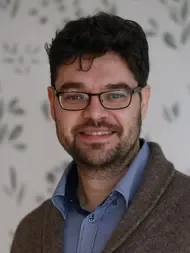
PD Dr. Daniel KatsGroup Leader at the Max Planck Institute for Solid State Research (MPI-FKF)homepage |
Coupled Cluster TheoryWe are extending the coupled cluster theory, one of the most successful theories for ab-initio simulations of molecules, to study strongly correlated, extended and periodic molecular systems. We are developing novel coupled cluster approaches and embedding methodologies, and use automatic coding techniques to implement the new methods. These methods can be applied to various molecular or model systems, with strongly and weakly correlated electrons, to calculate ground and excited state properties and to predict or explain experimental findings. The lion's share of our implementations is done in our open-source Julia package for electron-correlation methods ElemCo.jl. |
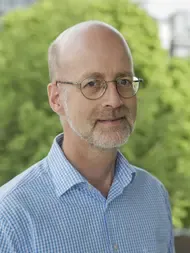
Prof. Bernhard KeimerDirector at the Max Planck Institute for Solid State Research (MPI-FKF) Speaker of the IMPRS-CMShomepage |
Physics of Strongly Correlated Electron SystemsThe department uses neutron and X-ray diffraction and spectroscopy as well as optical spectroscopy and Raman scattering to explore the structure and dynamics of materials with strong electron correlations. We also have a strong effort in the development of new spectroscopic methods. As the close collaboration between experimentalists and theorists is essential for progress in this field, a small theory group operates within the department. |
Dr. Thomas Keller |
|
Klaus KernDirector at the Max Planck Institute for Solid State Research (MPI-FKF) & Professor at the Swiss Federal Institute of Technology, Lausannehomepage |
Nanoscale ScienceNanoscience and nanotechnology; surfaces and interfaces; self-organisation phenomena and epitaxial growth; fabrication and characterization of metal, semiconductor and molecular nanostructures; molecular electronics; carbon nanotubes and graphene; clusters and nanocrystals; interactions and processes on the atomic and molecular scale; scanning probe microscopy and spectroscopy; nanooptics |
Dr. Gideok Kim |
|

Dr. Hagen KlaukHead of the Max Planck Research Group "Organic Electronics" at the Max Planck Institute for Solid State Research (MPI-FKF)homepage |
Organic ElectronicsResearch in the Organic Electronics group focuses on novel functional organic materials and on the manufacturing and characterization of organic and nanoscale electronic devices, such as high-performance organic thin-film transistors, carbon nanotube field-effect transistors, and inorganic semiconductor nanowire field-effect transistors. Of particular interest is the use of molecular self-assembled monolayers in functional electronic devices. We are developing materials and manufacturing techniques that allow the use of high-quality self-assembled monolayers as the gate dielectric in low-voltage organic and inorganic field-effect transistors and low-power integrated circuits on flexible substrates. |
Prof. Dr. Elio König |
|
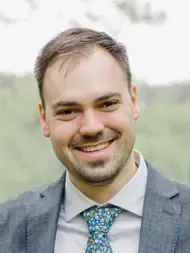
Dr. Simon KrauseGroup Leader at the Max Planck Institute for Solid State Research (MPI-FKF)homepage |
Dynamic framework materials and molecular machinesOur interdisciplinary research group explores how to teach crystals tricks of living matter by investigating dynamic features of molecular framework materials such as metal-organic and covalent organic frameworks (MOFs and COFs). By specifically tuning the structural topology of the framework, we create soft porous crystals which exhibit pore contraction and/or expansion as a response to the adsorption of gases and fluids or external triggers such as light irradiation. Such materials can act as responsive cargo-release systems, nanoscopic sensors or feature counterintuitive phenomena such as negative gas adsorption. We furthermore construct frameworks which contain molecular machines such as light-driven molecular motors and switches as responsive and intrinsically dynamic building blocks. We aim towards collective operating molecular machines in the solid state which are able to actively transport molecules in the pore space and facilitate dynamic conversion and storage of energy carriers and other small molecules. Our diverse team uses a wide range of synthetic and experimental tools and collaborates in national and international research projects to push the boundaries of dynamic features in crystalline solids. |
Prof. Dr. Anke KruegerChair of Organic Chemistry at University of Stuttgart, Faculty of Chemistry and Materials Sciencehomepage |
Synthesis, characterization and application of carbon nanomaterials and carbon-rich organic moleculesOur work is dedicated to the synthesis, characterization and application of different carbon nanomaterials such as nanodiamond, diamond films and carbon onions as well as carbon-rich organic molecules for a broad range of applications. These applications include drug delivery, tissue engineering, quantum sensing and other quantum technologies, photocatalysis and energy storage in batteries and supercapacitors. We are looking for experimental chemists and materials scientist with a keen interest in the development and functionalization of novel materials using methods from solid state and organic and inorganic chemistry as well as chemical vapour deposition. We use a broad range of spectroscopic and microscopic techniques, such as Raman, IR and x-ray spectroscopies, TEM and SEM as well as particle analysis in combination with classic characterization techniques such as NMR ans MS. For applying to our group, experience with either materials synthesis using CVD or related techniques and/or synthetic chemistry also under inert conditions is a plus. |
Dr. Kathrin KuesterPrincipal Investigatorhomepage |
Proximity couping in 2D systemsTwo dimensional materials have gained increasing interest in recent year due to the deviation of their properties from the respective 3D counterpart. Furthermore, the precise stacking of those materials can create new quantum materials with fascinating properties ranging from superconductivity to magnetic properties and correlated effects. In our group we use graphene on SiC as a starting point and by intercalation of 2D materials or on surface deposition the electronic properties of graphene and its adjacent 2D materials can be steered. Recently we have shown the heavy doping of graphene by proximity coupling can lead to superconductivity in the graphene. Coupling to lead instead leads to a spin signature in graphene which is otherwise absent. |

Prof. Dr. Sabine LaschatDirector of the Institute of Organic Chemistry, University of Stuttgarthomepage |
Catalysis - Liquid Crystals - Synthesis of Natural ProductsMy research interests deal with the design, synthesis and characterization of novel liquid crystalline materials, hybrid materials of dyes and liquid crystals, as well as biomaterials. We try to understand structure property relationships in such materials towards novel organic electronics, ion conductors and battery materials. |
Dr. Giovanni Li ManniGroup Leader at the Electronic Structure Theory Department, Max Planck Institute for Solid State Research (MPI-FKF) |
Quantum chemistry calculations for magnetic, catalytic and optical properties properties of mono- and poly-nuclear transition metal clustersThe research conducted by our group focuses on the development of advanced electronic structure theory for studying the complex magnetic, optical and catalytic properties of mono- and polynuclear transition metal clusters. Our work extends to the investigation of biological and biomimetic materials, as well as cluster models of crystals with increasing size and electronic complexity. Spin is the centerpiece of our research. Utilizing stochastic multiconfigurational methods, perturbation theory, and Multiconfiguration Pair-Density Functional Theory (MC-PDFT), we address open questions regarding their ground, excited, and transition states. For instance, we employ Stochastic-CASSCF, perturbation theory, and MC-PDFT to resolve the low-energy states of FeS cubanes, active in the nitrogen fixation process and the Co3ErO4 cubane, which serves as a biomimetic analog of the CaMn4O5 cluster in photosystem II, active towards the water splitting reaction. Our simulations provide valuable insights into the magnetic interactions across the metal centers, and predictions of the magnetic susceptibility at variable temperature. Additionally, we utilize metaheuristics, such as genetic algorithms and machine learning strategies, to enhance the efficiency of our electronic structure methods and to deepen our understanding of the magnetic properties of these systems. |
Prof. Dr. Laura Na Liu |
|
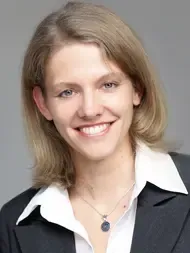
Prof. Dr. Bettina LotschMax Planck Research Group Leader "Nanochemistry" at the Max Planck Institute for Solid State Research (MPI-FKF) & Professor at the LMU Munichhomepage |
NanochemistryOur research explores the rational synthesis of new functional materials by combining the tools of molecular, solid-state and nanochemistry. Research interests include the design of organic, inorganic and hybrid materials for solar energy conversion and storage, ion conductors for electrochemical energy storage, and “smart” photonic crystals for optical sensing. We aim at creating function from both atomic-scale structure and nanoscale morphology, with a strong emphasis on exploring structure-property relationships based on a variety of diffraction and spectroscopic techniques. Recent activities include the development of molecular frameworks for solar batteries, “dark” photocatalysis, photomemristive sensors, and (photo)electrocatalytic CO2 conversion, the development of quantum materials for (photo)electrocatalysis, as well as the design of lithium and sodium thiophosphate and sulfide solid electrolytes for all-solid-state batteries. |
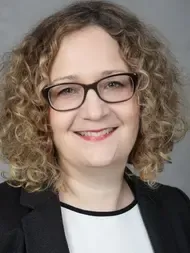
Prof. Dr. Sabine LudwigsHead of Chair of Structure and Properties of Polymeric Materials, Institute of Polymer Chemistry, University of Stuttgarthomepage |
Structure and Properties of Functional Polymeric MaterialsIn our interdisciplinary and international research team of polymer chemists, physical chemists and materials scientists we are developing functional and intelligent polymer materials and devices. One of the main aims is to control and manipulate structure-property relationships of hierarchical architectures from the molecular via the nanoscopic to the macroscopic device level. Functionalities include:
|
Dr. Yang Luo |
|
Dr. Luigi Malavolti |
|
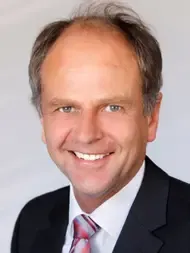
Prof. Dr. Jochen MannhartDirector at the Max Planck Institute for Solid State Research (MPI-FKF)homepage |
Solid State Quantum ElectronicsThe department explores interfaces in complex materials to create and understand new electronic systems, materials, and novel physical phenomena. This work is fundamental science in an area that is also of interest for possible applications. Complex oxide heterostructures are synthesized on the atomic scale by using advanced epitaxial growth techniques. Lateral confinement on the nanometer scale, for example by e-beam lithography, is applied to create complex 1D and 0D electronic systems. The department is furthermore striving to understand and advance thermoelectronic energy conversion, with the goal of creating a method to convert with very high efficiency solar radiation or heat into electricity. |
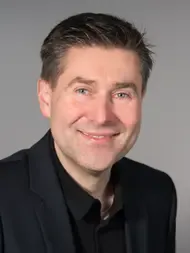
Prof. Dr. Dirk ManskeGroup Leader at the Max Planck Institute for Solid State Research (MPI-FKF)homepage |
Theory of Unconventional Superconductors / Non-equilibrium Higgs Spectroscopy of SuperconductorsThe research in my group is mainly focused on non-equilibrium phenomena in Quantum Materials as well as on novel Josephson and Proximity effects using triplet superconductors. One major direction of our actual investigations are Higgs oscillations in superconductors under non-equilibrium conditions. Employing various non-equilibrium techniques we have predicted unique effects that provide novel insights into unconventional superconductors. We collaborate with many experimental groups in Stuttgart as well as in Toyko and Vancouver within the framwork on the Max Planck--UBC--UTokyo Center for Quantum Materials. With the prediction of novel and Josephson and Proximity effects in triplet junctions my group has opened a new field of research in condensed matter physics. Finally, I pioneered a new field 'Higgs spectroscopy' where collective modes of the superconducting order parameter classifies the ground state. A new field in the area of superconductivity. Experiments have confirmed our recent predictions. |
Dr. Rotraut Merkle |
|

Prof. Dr. Walter MetznerDirector at the Max Planck Institute for Solid State Research (MPI-FKF)homepage |
Quantum Many-Body TheoryIn the Quantum Many-Body Theory department, electronic properties of solids are analyzed and computed with a main emphasis on systems where electronic correlations play a crucial role, such as high temperature superconductor and other transition metal oxides. Besides bulk properties of one-, two- and three-dimensional systems also surface states of topological phases, as well as problems with a mesoscopic length scale such as quantum dots, quantum wires, and quantum Hall systems are being studied. The correlation problem is treated by various modern numerical and field-theoretical techniques. |
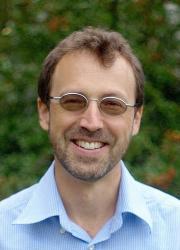
Prof. Dr. Peter MichlerDirector of the Institut für Halbleiteroptik und Funktionelle Grenzflächen, University of Stuttgarthomepage |
Semiconductor OpticsThe main research direction of the institute concerns the fabrication, characterization and study of new kinds of non-classical light sources, e.g. single-photon and entangled-photon sources and different kinds of semiconductor lasers. A special focus lies on their quantum optical properties and their applications in quantum information technology. Further goals are the study of resonator quantum electrodynamics effects in semiconductors. Here an ultimate goal is to develop methods to couple two or more quantum dots via high-quality modes of photonic cavities. We also have a strong effort on the epitaxial growth of semiconductors (MOVPE, arsenides, phospides, nitrides) and their structuring to novel photonic devices and circuits. |
Dr. Matteo Minola |
|
Prof. Dr. Rainer NiewaInstitute of Inorganic Chemistry, University of Stuttgart |
Inorganic Solid State Chemistry and Development of New MaterialsThe work focuses on synthesis and detailed characterization of metal-rich compounds, preferentially containing nitrogen as a constituent. First emphasis is the design and development of preparative techniques as basis for synthesis of novel materials. Special attention is granted to structural characterization, electronic and magnetic properties as well as mechanical and chemical behavior. These data are inevitable for any detailed consideration of chemical bonding and potential applications. • Advanced solid state synthesis of functional materials including various high pressure techniques, solvothermal synthesis and crystal growth, high temperature synthesis • Solid state reaction pathways and crystal growth mechanisms • Magnetic and superconducting materials, ionic conductors |
Dr. Jürgen Nuss |
|
Dr. Pavel Ostrowsky |
|
Dr. Ricardo Javier Pena Roman |
|

Prof. Dr. Tilman Pfau |
|
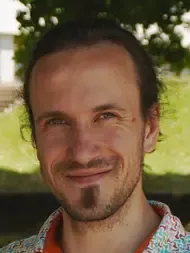
Prof. Dr. Bertold RascheJun.-Prof. at the Department of Inorganic Chemistry, University of Stuttgarthomepage |
Solid State and ElectrochemistryElectrochemistry provides us with an unmatched lever to control the chemical equilibrium. Employing this lever in inorganic solid state chemistry allows the access to new (metastable) phases and structures. Concomitantly, electrochemistry affords an outstanding precision in the control and analysis of the composition of phases. This is particularly needed when studying complex physical phenomena such as superconductivity, because these properties are often very sensitive towards composition.
|
Dr. Pascal Reiss |
|
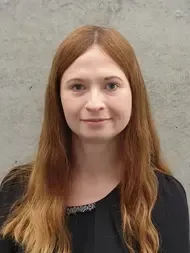
Anna Maria RoslawskaGroup Leader at the Max Planck Institute for Solid State Researchhomepage |
Atomic-scale opticsWhat does a single molecule look like? How can we excite it and control its emission? How can we build more complex molecular structures “by hand”? How can we tune the quantum properties of light with atomic precision? In our research team, we answer these questions using the combination of scanning tunneling microscopy (STM) with optics. This way, we bring the best of the two worlds together, the sub-nm resolution of STM, and all the information carried by photons to study optics at the atomic scale. Using this method we learn previously inaccessible details about mechanisms like light-harvesting, photosynthesis, and electron-to-photon conversion. |
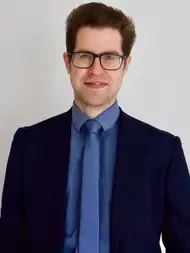
Dr. Thomas SchäferHead of Research Group at the Max Planck Institute for Solid State Research (MPI-FKF) |
Theory of Strongly Correlated Quantum MatterMaterials with strong electronic correlations are amongst the most intriguing topics at the forefront of research in condensed matter physics. On the one hand, they exhibit fascinating phenomena like quantum criticality and high-temperature superconductivity, bearing a high potential for applications. On the other hand, they are theoretically very appealing due to their limited understanding, even on the very fundamental level. Within the research group “Theory of Strongly Correlated Quantum Matter”, starting from September 2020, the frontier of this fundamental understanding is pushed by applying cutting-edge numerical quantum field theoretical methods to quantum critical systems, high-temperature superconductors, Mott insulators and magnetically frustrated systems, both in the purely model (Hubbard model, periodic Anderson model) as well as material oriented (heavy fermions, cuprates, organics) context. |
Prof. Dr. Mathias ScheurerProfessor at the University of Stuttgart, Institute for Theoretical Physics IIIhomepage |
Theory of strongly correlated quantum matterOur research deals with the theoretical description of the emergent collective phenomena that arise in interacting quantum many-body systems, resulting from competing interactions, disorder, and topology. More specifically, we are interested in unconventional and topological superconductivity, complex phase diagrams, the impact of impurities in crystals, spin-orbit coupling, magnetism, spin liquids and topological order, moiré superlattice systems, non-Hermitian many-body physics, and more. To address these problems, we use a combination of analytical and numerical techniques of quantum field theory and statistical mechanics. Furthermore, we explore the potential of machine-learning to address problems of many-body physics.
|

Prof. Dr. Guido SchmitzChair of Materials Physics, IMW University of Stuttgarthomepage |
Nanoanalysis in Outstanding ResolutionOur team concentrates on the nanoanalysis of interreactions. We are experts in atom probe tomography to investigate solid-state processes in single-atom sensitivity and resolution. Presently, innovative instruments are developed to study the chemistry of solid/liquid interfaces with the same methods. From the perspective of materials physics, short-circuit atomic transport along triple junctions or other higher order defects in complex materials are of particular interest. We are running a sputter deposition laboratory to produce required model structures from metallic thin films and metallic nanowires. We assemble promising all-solid-state batteries and sensor devices. Theoretical work is performed by Molecular Dynamics or Monte-Carlo simulation to predict field evaporation and emission from nanometric tips. Furthermore, we study thermodynamic properties of topologically necessary defects and the mechanical stability of thin films by theoretical methods. |
Dr. Andreas SchnyderGroup Leader at the Max Planck Institute for Solid State Research (MPI-FKF)homepage |
Theory of Topological Quantum MatterOur research group studies electronic and magnetic structures of quantum materials. A special focus is on topological materials, which exhibit unusual properties, such as exotic surface states and anomalous transport phenomena, that are unaffected by continuous deformations, e.g., stretching, compressing, or twisting. Our aim is to develop a theoretical framework to describe these topological properties, and to find new ways how to use them in the laboratory and for device applications. We seek to classify topological materials in terms of symmetries and to discover new remarkable examples. Current research priorities focus on the topological properties of nodal-line semimetals, topological metals with nodal planes, altermagnets, and unconventional superconductors, which we study using both analytical and numerical techniques. |
Dr. Aparajita SinghaEmmy Noether research groupleader at the Max Planck Institute for Solid State Research (MPI-FKF)homepage |
Quantum sensingResearch:
|
Dr. rer. nat. habil. Jurgen SmetMax Planck Research Group Leader "Solid State Nanophysics" at the Max Planck Institute for Solid State Research (MPI-FKF)homepage |
Solid State NanophysicsResearch in the Solid State Nanophysics Group focuses on the study of the many unusual ways in which electrons organize themselves as a result of interactions and correlations among their charge and spin degrees of freedom, when these electrons are confined in one or more dimensions on the nanometer scale. Transport and optical properties are investigated with local probe methods, at low temperatures, in high magnetic fields, under high frequency radiation or any combination thereof. The electrons are confined in strictly two-dimensional crystals such as graphene or other single layers of the large class of layered materials with weak interlayer forces. Also hybrid stacks of these two-dimensional crystals are fabricated and explored in a quest for novel functionalities and interaction physics. |
Dr. Vesna Srot |
|
Prof. Dr. Ulrich StarkeHead of the Scientific Facility "Interface Analysis" at the Max Planck Institute for Solid State Research (MPI-FKF)homepage |
Interface AnalysisIn our group we study the atomic and electronic structure of solid surfaces and 2D materials. A strong focus of the research is the growth and functionalization of epitaxial graphene on Silicon Carbide. By means of atomic intercalation we can tailor graphene’s electronic properties. We use angle-resolved photoemission spectroscopy (ARPES) to investigate doping and renormalization of the π-bands in graphene – in the home lab and at synchrotron facilities. Structured SiC substrates are the basis to grow epitaxial graphene nanoribbons with a one-dimensional electronic spectrum. The interaction of hetero-epitaxial 2D materials (e.g. transition metal dichalcogenides) and molecular layers with the graphene and its influence on both, the graphene and the 2D layer is studied with a multitude of surface science methods in ultra-high vacuum. |
Dr. Eren Suyolcu |
|
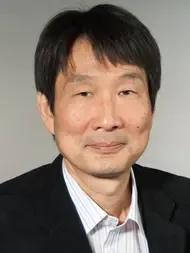
Prof. Dr. Hidenori TakagiDirector at the Max Planck Institute for Solid State Research (MPI-FKF) & Professor at the University of Tokyo & Humboldt Professor at the University of Stuttgarthomepage |
Quantum MaterialsEntanglement of electrons (electron correlations) in solids, in combination with details of the crystal lattice structure, produce a surprisingly rich variety of electronic phases, that are liquid, liquid-crystal and crystalline states of the charge and spin degrees of freedom. These complex electronic phases and the subtle competition among them very often give rise to novel functionality. The department will be studying these interesting novel phases in transition metal oxides and related compounds where the narrow d-bands, which give rise to strong electron correlations, in combination with the rich chemistry of such materials provides excellent opportunities for new discoveries. The goal of this research will be to hunt for new materials exhibiting exotic electronic states of matter, showing phenomena such as superconductivity or high thermoelectricity, and to explore them with advanced measurement techniques to unveil the physical mechanisms that could be drivers of potentially highly desirable functionality. |
Dr. Tomohiro Takayama |
|
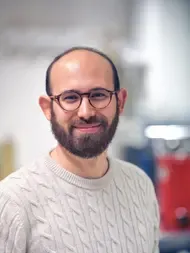
Dr. Lorenzo TesiEmmy Noether Junior Group Leaderhomepage |
Molecular Spin Qubits in Two-Dimensions at THz FrequencyAmong the possible systems that exhibit quantum properties, molecular spin qubits (MSQs) are one of the most versatile platforms. At the heart of MSQs is the electronic spin, which can originate from unpaired electrons of organic centers, transition metals or lanthanides. The organic ligand surrounding the qubit can also be engineered to tune the electronic and spin properties. My group focuses on the deposition of MSQs on surfaces and investigation using spectroscopic techniques, in particular magnetic resonance. We also aim to extend the operating frequency range from X-band (9 GHz) to THz (> 100 GHz) using plasmonic metasurface magnetic resonators designed and fabricated by us. The group is therefore very multidisciplinary, at the interface of chemistry and physics, and young, having been established in January 2024
|
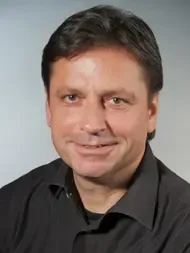
Prof. Dr. Peter van AkenLeader of the Stuttgart Center for Electron Microscopy (StEM) at the Max Planck Institute for Solid State Research (MPI-FKF) & Adj. Professor at the University of Darmstadthomepage |
Prof. Dr. Peter van Aken Leader of the Stuttgart Center for Electron Microscopy (StEM) at the Max Planck Institute for Solid State Research (MPI-FKF) & Adj. Professor at the University of DarmstadtElectron Microscopy Prof. Dr. Peter van Aken Leader ofThe Stuttgart Center for Electron Microscopy (StEM) is an internationally recognized center for advanced electron microscopy. The center has a long tradition of applying and developing new microscopy techniques for the investigation of novel materials. The extensive expertise of the researchers and technicians in the group is complemented by a range of instruments; StEM possesses 8 TEMs, including two state-of-the-art Cs-corrected TEMs, 5 SEMs, and a suite of specialized sample preparation equipment. The group undertakes both independent research and collaborative projects with other groups at the Stuttgart Max Planck Institutes. In heterostructures and functional thin films, StEM investigates structure and chemistry around defects and interfaces at atomic resolution. In bio-composite systems, StEM is studying biologically-driven mechanisms for nanostructure replication and organization. The group has a well-developed program investigating plasmons and electron-interactions, both through experiments and modeling. Many other research projects are described on the StEM webpages. |
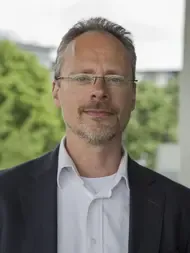
Prof. Dr. Joris van SlagerenUniversity Professor, Institute of Physical Chemistry, University of Stuttgarthomepage |
Advanced Spectroscopy for Quantum Technologies and Catalysis· Spectroscopy, especially electron paramagnetic resonance spectroscopy at conventional and high frequencies. We apply and develop a wide range of experimental methods.
· Molecular Quantum Science and Technologies, understanding, engineering and application of molecules in novel quantum architectures.
· Molecular Nanomagnets, understanding of electronic structure and magnetic properties of molecular systems with bistable magnetization of molecular origin.
· Catalysis, application of (THz and conventional) EPR methods in catalysis research, pushing toward in situ and operando investigations. |
Dr. Hongguang Wang |
|
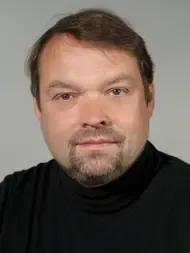
Prof. Dr. Jürgen WeisHead of the Scientific Facility "Nanostructuring Lab" at the Max Planck Institute for Solid State Research (MPI-FKF)homepage |
Electronic Properties of Mesoscopic and Low-Dimensional Electron SystemsElectrical transport through single and coupled quantum dot systems (single-electron charging, Kondo physics) have been a long lasting topic. Furthermore, a scanning force microscope has been operated at 1.4 K to extract Hall potential profiles and current distributions in quantum Hall samples. Recently we have enhanced our abilities by a scanning probe microscope - operated below 0.1 K - using an array of single-electron transistors as probes. Being responsible for the Nanostructuring Lab of the institute, the fabrication of functional nanostructures for electronic, plasmonic or optical applications using state-of-the-art electron beam lithography became a major task. |
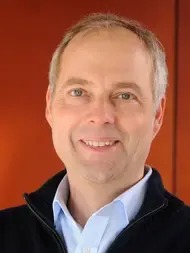
Prof. Dr. Jörg WrachtrupDirector of the 3rd Physics Institute, University of Stuttgarthomepage |
Solid State Quantum Physics and TechnologyThe group capitalizes on generating synthetic spin systems in solids envisioning their precise quantum optical control. In the course of that research, spin arrays in insulators like e.g. diamond are generated and individual spin states are controlled. The systems provide a means to understand and develop control mechanisms in complex interaction many particle systems. Specifically engineered spin states are used for ultraprecise field measurements. Solid state quantum optics and magneto optics commences via integration of those structures in cavities and plasmonic resonators. Among the major long term research goals is the integration of mechanical and spin systems with the aim to explore the quantum mechanics of hybrid quantum systems with a large degree of freedom and precise unitary control. |
Dr. Alexander Yaresko |