IMPRS-CMS group leaders participating in the current round
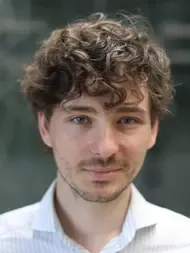
Dr. Julien BarrierGroup Leader at the Max Planck Institute for Solid State Research (MPI-FKF)homepage |
Low-dimensional quantum electronicsThe emergence of strongly correlated electronic phases remains one of the unsolved puzzles of modern condensed matter physics. In low dimensions, the strength of interactions between electrons is enhanced, which make these systems prime candidate to understand the origin of emerging electronic phases, with the added benefit of metrology and quantum computing applications. Our research group combines nanofabrication of graphene structures, local probes and quantum transport at ultra-low temperatures to induce, control and explore strong electron interactions in one- and two-dimensional systems. We experimentally control the magnitude of electron-electron interactions in quantum materials to understand the interplay between quantum confinement, non-trivial topology and interaction strength. |
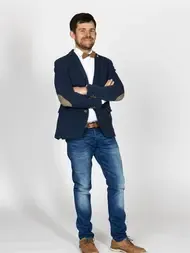
Prof. Dr. Oliver ClemensProfessor for Materials Chemistry at University of Stuttgarthomepage |
New Materials for Energy ApplicationsThe group works on a broad range of materials synthesis and characterization aspects. The development and synthesis of materials for novel battery systems (including there structural characterization and determination of structure-property relationships), among them fluoride ion batteries and solid state batteries is a key topic in this aspect. But we reach out far beyond the pure battery aspects. For materials used within fluoride ion batteries as electrode materials, the intercalation and deintercalation of fluoride ions leads to a change of electronic properties, and can induce novel magnetic phenomena or superconductivity. The development of catalysts for the oxygen reduction reaction is further connected to the chemistry of oxyfluoride compounds. Beyond this, PLD-based synthesis of oxide materials and their subsequent topochemical modification has reached current attention in our research. In addition, we target the determination of sustainability aspects of materials for solid state batteries, considering their suitability for circular economy. Here, we try to develop innovative separation processes to keep the materials as functional as possible. Methods used in the group comprise solid state and wet-chemical synthesis routes, thin film deposition (including pulsed laser deposition or spin coating) as well as topochemical low-temperature routes, combined with structural, electrochemical and magnetic characterization and compositional analysis. In case you want to apply for my group, please also provide your application documents in addition to imprs-clemens@imw.uni-stuttgart.de. Since our working topics are within a broad context, please also provide information on which research subfield attracts you most. |
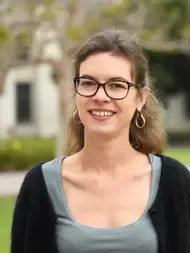
Prof. Dr. Raphaele ClémentDirector of the Max Planck Institute for Solid State Researchhomepage |
Department of Electrochemical MaterialsOur research seeks to elucidate the links between the structure and properties of technologically-relevant materials. The primary goal of our work is to advance electrochemical energy storage through the design and control of the atomic and electronic structure, and microstructure of materials, including the discovery of novel compounds, and through the optimization of interfaces and composite structures in devices. Our approach encompasses innovative synthesis approaches, electrochemical testing, as well as the in-depth investigation of structural and electronic phenomena taking place in the electrodes, in the electrolyte, and at their interfaces during battery function. For this, we use complementary diagnostic tools, from state-of-the-art spectroscopy, to diffraction/scattering, to electron microscopy. In particular, we develop high resolution solid-state nuclear magnetic resonance (NMR) spectroscopy, operando and in situ NMR and electron paramagnetic resonance (EPR) spectroscopy, magnetometry, and magnetic resonance imaging (MRI). Another pillar of our work is the development of first principles and statistical mechanics computations to facilitate the interpretation of our experimental results. |
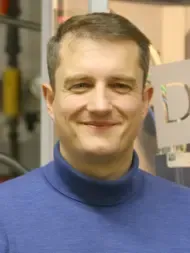
Prof. Dr. Robert DinnebierLeader of the Scientific Facility "X-Ray Diffraction" at the Max Planck Institute for Solid State Research (MPI-FKF), Adj. Professor at the University of Stuttgart, Hon. Professor at the University of Tübingenhomepage |
X-Ray Powder Diffraction• All aspects of modern powder diffraction • Structure determination • Thermochromic / Photochromic / Electronic / Magnetic materials • Microstructure • In-situ/time-resolved • Non-ambient conditions • Rietveld refinement • Parametric refinement • Landau theory / Strain-order parameter coupling • Method of Maximum Entropy |

Prof. Dr. Martin DresselDirector of the 1st Physics Institute, University of Stuttgarthomepage |
Optical, Electronic, and Magnetic Properties of Quantum Materials, Topological Material, Superconducting Electronics, and Advanced Materials, BiomaterialsSolid state physics, correlated electron systems, molecular quantum materials, magnetically frustrated systems, quantum spin liquids, topological materials, Dirac and Weyl electrons, physics of low-dimensional solids, superconductivity, materials for quantum computers, superconducting electronics, electrodynamics of solids, infrared and THz optical measurements of solids, microwave spectroscopy, magneto-optics, ellipsometry. |

PD Dr. Daniel KatsGroup Leader at the Max Planck Institute for Solid State Research (MPI-FKF)homepage |
Coupled Cluster TheoryWe are extending the coupled cluster theory, one of the most successful theories for ab-initio simulations of molecules, to study strongly correlated, extended and periodic molecular systems. We are developing novel coupled cluster approaches and embedding methodologies, and use automatic coding techniques to implement the new methods. These methods can be applied to various molecular or model systems, with strongly and weakly correlated electrons, to calculate ground and excited state properties and to predict or explain experimental findings. The lion's share of our implementations is done in our open-source Julia package for electron-correlation methods ElemCo.jl. |
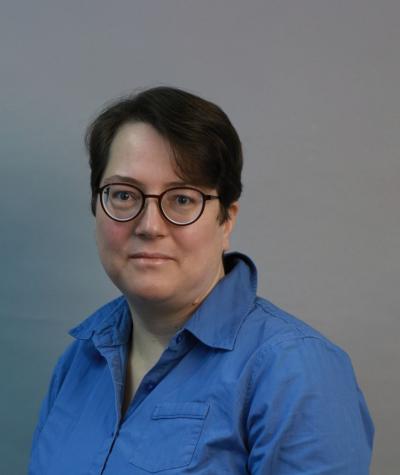
Dr. Kathrin KuesterGroup leader of the Scientific Facility Group "Interface Analysis" at the Max Planck Institute for Solid State Research (MPI-FKF)homepage |
Proximity couping in 2D systemsTwo dimensional materials have gained increasing interest in recent year due to the deviation of their properties from the respective 3D counterpart. Furthermore, the precise stacking of those materials can create new quantum materials with fascinating properties ranging from superconductivity to magnetic properties and correlated effects. In our group we use graphene on SiC as a starting point and by intercalation of 2D materials or on surface deposition the electronic properties of graphene and its adjacent 2D materials can be steered. Recently we have shown the heavy doping of graphene by proximity coupling can lead to superconductivity in the graphene. Coupling to lead instead leads to a spin signature in graphene which is otherwise absent. |
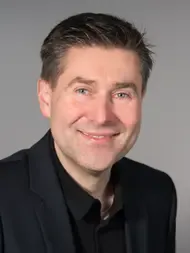
Prof. Dr. Dirk ManskeGroup Leader at the Max Planck Institute for Solid State Research (MPI-FKF)homepage |
Theory of Unconventional Superconductors / Non-equilibrium Higgs Spectroscopy of SuperconductorsThe research in my group is mainly focused on non-equilibrium phenomena in Quantum Materials as well as on novel Josephson and Proximity effects using triplet superconductors. One major direction of our actual investigations are Higgs oscillations in superconductors under non-equilibrium conditions. Employing various non-equilibrium techniques we have predicted unique effects that provide novel insights into unconventional superconductors. We collaborate with many experimental groups in Stuttgart as well as in Toyko and Vancouver within the framwork on the Max Planck--UBC--UTokyo Center for Quantum Materials. With the prediction of novel and Josephson and Proximity effects in triplet junctions my group has opened a new field of research in condensed matter physics. Finally, I pioneered a new field 'Higgs spectroscopy' where collective modes of the superconducting order parameter classifies the ground state. A new field in the area of superconductivity. Experiments have confirmed our recent predictions. |
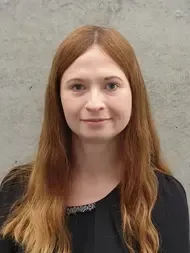
Anna Maria RoslawskaGroup Leader at the Max Planck Institute for Solid State Researchhomepage |
Atomic-scale opticsWhat does a single molecule look like? How can we excite it and control its emission? How can we build more complex molecular structures “by hand”? How can we tune the quantum properties of light with atomic precision? In our research team, we answer these questions using the combination of scanning tunneling microscopy (STM) with optics. This way, we bring the best of the two worlds together, the sub-nm resolution of STM, and all the information carried by photons to study optics at the atomic scale. Using this method we learn previously inaccessible details about mechanisms like light-harvesting, photosynthesis, and electron-to-photon conversion. |
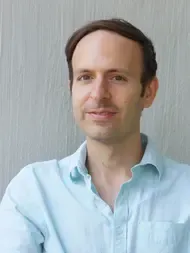
Prof. Dr. Mathias ScheurerProfessor at the University of Stuttgart, Institute for Theoretical Physics IIIhomepage |
Theory of strongly correlated quantum matterOur research deals with the theoretical description of the emergent collective phenomena that arise in interacting quantum many-body systems, resulting from competing interactions, disorder, and topology. More specifically, we are interested in unconventional and topological superconductivity, complex phase diagrams, the impact of impurities in crystals, spin-orbit coupling, magnetism, spin liquids and topological order, moiré superlattice systems, non-Hermitian many-body physics, and more. To address these problems, we use a combination of analytical and numerical techniques of quantum field theory and statistical mechanics. Furthermore, we explore the potential of machine-learning to address problems of many-body physics.
|
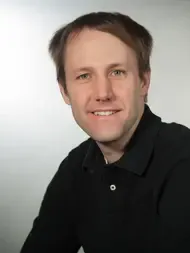
Dr. Andreas SchnyderGroup Leader at the Max Planck Institute for Solid State Research (MPI-FKF)homepage |
Theory of Topological Quantum MatterOur research group studies electronic and magnetic structures of quantum materials. A special focus is on topological materials, which exhibit unusual properties, such as exotic surface states and anomalous transport phenomena, that are unaffected by continuous deformations, e.g., stretching, compressing, or twisting. Our aim is to develop a theoretical framework to describe these topological properties, and to find new ways how to use them in the laboratory and for device applications. We seek to classify topological materials in terms of symmetries and to discover new remarkable examples. Current research priorities focus on the topological properties of nodal-line semimetals, topological metals with nodal planes, altermagnets, and unconventional superconductors, which we study using both analytical and numerical techniques. |
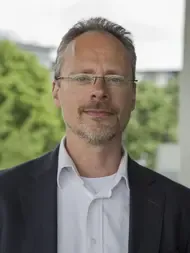
Prof. Dr. Joris van SlagerenUniversity Professor, Institute of Physical Chemistry, University of Stuttgarthomepage |
Advanced Spectroscopy for Quantum Technologies and Catalysis· Spectroscopy, especially electron paramagnetic resonance spectroscopy at conventional and high frequencies. We apply and develop a wide range of experimental methods. · Molecular Quantum Science and Technologies, understanding, engineering and application of molecules in novel quantum architectures. · Molecular Nanomagnets, understanding of electronic structure and magnetic properties of molecular systems with bistable magnetization of molecular origin. · Catalysis, application of (THz and conventional) EPR methods in catalysis research, pushing toward in situ and operando investigations. |